

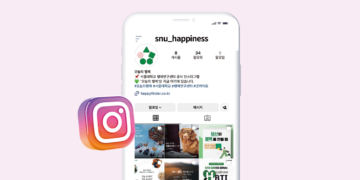
서울대학교 행복연구센터

서울대학교 행복연구센터

Nowlis, S. M., Mandel, N., &McCabe, D. B. (2004). The effect of a delay between choice and consumption on consumption enjoyment. Journal of Consumer Research, 31(3), 502-510.

A consumer choosing a product must often wait before consuming it. In this article, we consider the consequences of waiting on consumption enjoyment. We propose that the effect of a delay on consumption enjoyment depends on both the negative utility of the wait itself and on the positive utility of anticipating a pleasant consumption experience. These factors exert different degrees of influence, depending on characteristics...

Read moreDetails

Kassam, K. S., Gilbert, D. T., Boston, A., &Wilson, T. D. (2008). Future anhedonia and time discounting. Journal of Experimental Social Psychology, 44(6), 1533-1537.

The temporal location of an event influences the way people mentally represent that event. We suggest (a) that such representational differences can produce an affective forecasting error that we call future anhedonia, which is the belief that hedonic states will be less intense in the future than in the present, and (b) that future anhedonia plays a role in time discounting (i.e., the tendency to...

Read moreDetails

Amir, O., &Ariely, D. (2007). Decisions by rules: The case of unwillingness to pay for beneficial delays. Journal of Marketing Research, 44(1), 142-152.

Since the emergence of neoclassical economics, individual decision making has been viewed largely from an outcome-maximizing perspective. Building on previous work, the authors suggest that when people make payment decisions, they consider not only their preferences for different alternatives but also guiding principles and behavioral rules. The authors describe and test two characteristics pertaining to one specific rule that dictates that consumers should not pay...

Read moreDetails

Wilson, T. D., Lisle, D. J., Kraft, D., &Wetzel, C. G. (1989). Preferences as expectation-driven inferences: Effects of affective expectations on affective experience.

Presents a model arguing that affect and emotion are often formed in an expectation-driven fashion. A pilot study and 2 experiments manipulated undergraduate Ss' affective expectations (e.g., how funny they expected a set of cartoons to be) and whether Ss' expectations were confirmed (e.g., whether the cartoons really were funny). When the value of a stimulus was consistent with an affective expectation, people formed evaluations...

Read moreDetails

Kemp, S., Burt, C. D., &Furneaux, L. (2008). A test of the peak-end rule with extended autobiographical events. Memory &Cognition, 36(1), 132-138.

Forty-nine students went on vacation for an average of 7 days and sent daily text messages about the happiness they had experienced over the previous 24 h. After their vacation, they were questioned on the overall happiness they had experienced and were asked to recall the daily record of their happiness. The duration of the vacation had no effect on the subsequent evaluations, and participants...

Read moreDetails

Vohs, K. D., Mead, N. L., &Goode, M. R. (2006). The psychological consequences of money. science, 314(5802), 1154-1156.

Money has been said to change people's motivation (mainly for the better) and their behavior toward others (mainly for the worse). The results of nine experiments suggest that money brings about a self-sufficient orientation in which people prefer to be free of dependency and dependents. Reminders of money, relative to nonmoney reminders, led to reduced requests for help and reduced helpfulness toward others. Relative to...

Read moreDetails

Quoidbach, J., Dunn, E. W., Petrides, K. V., &Mikolajczak, M. (2010). Money giveth, money taketh away: The dual effect of wealth on happiness. Psychological Science, 21(6), 759-763.

This study provides the first evidence that money impairs people’s ability to savor everyday positive emotions and experiences. In a sample of working adults, wealthier individuals reported lower savoring ability (the ability to enhance and prolong positive emotional experience). Moreover, the negative impact of wealth on individuals’ ability to savor undermined the positive effects of money on their happiness. We experimentally exposed participants to a...

Read moreDetails

Koo, M., et al. (2008). It& #39;s a wonderful life: Mentally subtracting positive events improves people& #39;s affective states, contrary to their affective forecasts.

The authors hypothesized that thinking about the absence of a positive event from one's life would improve affective states more than thinking about the presence of a positive event but that people would not predict this when making affective forecasts. In Studies 1 and 2, college students wrote about the ways in which a positive event might never have happened and was surprising or how...

Read moreDetails

Kurtz, J. L. (2008). Looking to the future to appreciate the present: The benefits of perceived temporal scarcity. Psychological Science, 19(12), 1238-1241.

Both psychological research and conventional wisdom suggest that it can be difficult to attend to and derive enjoyment from the pleasant things in life. The present study examined whether focusing on the imminent ending of a positive life experience can lead to increased enjoyment. A temporal distance manipulation was used to make college graduation seem more or less close at hand. Twice a week over...

Read moreDetails

Brown, K. W., &Kasser, T. (2005). Are psychological and ecological well-being compatible? The role of values, mindfulness, and lifestyle. Social Indicators Research, 74(2), 349-368.

Happiness and ecological well-being are often portrayed as conflictual pursuits, but they may actually be complementary. In samples of adolescents (Study 1) and adults (Study 2), we tested this proposition and examined the role of three factors in promoting both subjective well-being (SWB) and ecologically responsible behavior (ERB). In both studies, individuals higher in SWB reported more ERB. An intrinsic value orientation (Studies 1 and...

Read moreDetails
Page 262 of 350 1 261 262 263 350

인기컨텐츠

추천링크

Welcome Back!

로그인

비밀번호 찾기

비밀번호를 재설정하려면 가입하신 아이디 또는 이메일 주소를 입력해 주세요.