

서울대학교 행복연구센터

서울대학교 행복연구센터

Levine, K. J., Muenchen, R. A., &Brooks, A. M. (2010). Measuring transformational and charismatic leadership: Why isn& #39;t charisma measured?.

The literature on both the Transformational and Charismatic theories of leadership espouse the importance of communication as part of the leadership phenomena. However, the existing measurement scales (The Multidimensional Leadership Questionnaire, the Conger–Kanungo Charisma Scale, the Followership Scale and the Romance of Leadership Scale) that are used to assess both the Transformational and Charismatic Theories fail to adequately address and measure the communication behaviors that...


Read moreDetails

Just, M. A., Keller, T. A., &Cynkar, J. (2008). A decrease in brain activation associated with driving when listening to someone speak. Brain research, 1205, 70-80.

Behavioral studies have shown that engaging in a secondary task, such as talking on a cellular telephone, disrupts driving performance. This study used functional magnetic resonance imaging (fMRI) to investigate the impact of concurrent auditory language comprehension on the brain activity associated with a simulated driving task. Participants steered a vehicle along a curving virtual road, either undisturbed or while listening to spoken sentences that...

Read moreDetails

Van Gelder, J. L., Hershfield, H. E., &Nordgren, L. F. (2013). Vividness of the future self predicts delinquency. Psychological science, 24(6), 974-980.

The tendency to live in the here and now, and the failure to think through the delayed consequences of behavior, is one of the strongest individual-level correlates of delinquency. We tested the hypothesis that this correlation results from a limited ability to imagine one’s self in the future, which leads to opting for immediate gratification. Strengthening the vividness of the future self should therefore reduce...

Read moreDetails

Mischel, W., Ebbesen, E. B., &Raskoff Zeiss, A. (1972). Cognitive and attentional mechanisms in delay of gratification.

Describes 3 experiments with a total of 92 3-5 yr. olds. Exp. I compared the effects of external and cognitive distraction from reward objects on the length of time which Ss waited for a preferred delayed reward before forfeiting it for a less preferred immediate one. In accord with predictions from an extension of frustrative nonreward theory, Ss waited much longer for a preferred reward...

Read moreDetails

Bakker, A. B. (2011). An evidence-based model of work engagement. Current Directions in Psychological Science, 20(4), 265-269.

  Employees who are engaged in their work are fully connected with their work roles. They are bursting with energy, dedicated to their work, and immersed in their work activities. This article presents an overview of the concept of work engagement. I discuss the antecedents and consequences of engagement. The review shows that job and personal resources are the main predictors of engagement. These resources gain...

Read moreDetails

Tugade, M. M., & Fredrickson, B. L. (2004). Resilient individuals use positive emotions to bounce back from negative emotional experiences.

Theory indicates that resilient individuals "bounce back" from stressful experiences quickly and effectively. Few studies, however, have provided empirical evidence for this theory. The broaden-and-build theory of positive emotions (B. L. Fredrickson, 1998, 2001) is used as a framework for understanding psychological resilience. The authors used a multimethod approach in 3 studies to predict that resilient people use positive emotions to rebound from, and find...

Read moreDetails

Fredrickson, B. L. (1998). What good are positive emotions?. Review of general psychology, 2(3), 300-319.

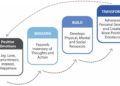
 This article opens by noting that positive emotions do not fit existing models of emotions. Consequently, a new model is advanced to describe the form and function of a subset of positive emotions, including joy, interest, contentment, and love. This new model posits that these positive emotions serve to broaden an individual's momentary thought–action repertoire, which in turn has the effect of building that individual's...

Read moreDetails

행복한 크리스마스를 보내기 위한 방법

  "행복한 크리스마스를 보내기 위한 방법은 무엇일까?" 2000년에 실시한 갤럽의 한 조사에 따르면, 미국인들 중 96%가 크리스마스를 기념한다고 밝혔다. 회사들도 그 날만큼은 휴업을 하고, 사람들은 모두 집에 돌아가고, 수십억달러가 선물을 준비하는 데에 쓰이고, 교회와 집과 도시 전체에 끝없는 불빛들이 찬란하게 빛난다.  현대의 크리스마스에는 다양한 주제가 뒤엉켜있다. 원래의 크리스마스의 의미는 예수그리스도의 탄생을 축하하기 위한 날이지만, 오늘날의 크리스마스에는 다양한 활동들이 행해지고 있다.누군가는 가족과 함께 즐기기도 하고, 누군가는 열심히 캐롤을 흥얼거리기도 하고,...

Read moreDetails

창의성의 어두운 면

 우리는 가끔 일상에서 특히 더 창의적인 사람들을 만날 수 있다. 즉, 평균보다 확실히 더 창의적인 사람들이 있다. 그렇다면, 무엇이 사람을 창의적으로 만들까? 누군가는 예술적인 창의성이 개인적으로 내재되어있는 성향이며, 변하지 않는 특성이라고 말하기도 한다. 하지만, 선행연구들에서는 그럼에도 불구하고 창의성에 영향을 미치는 강력한 상황적 요인이 있음을 밝히고 있다. 단적인 예로, 극적인 부정적 감정은 내성적인 생각과 인내심을 만들어 창의력을 높이곤 한다. 따라서 본 연구에서는 개인에 따라 다른 정서적 취약성과 창의성과...

Read moreDetails

창의력과 감정 간의 관계

  Annie Dillard (1989)는 말했다. "우리가 어떻게 하루를 보내는지는 우리가 어떻게 삶을 보내는지와 같다. 1시간 동안 한 일은 곧 우리가 하는 일과 같다." '창의력'을 연구하는 연구자들에게, 이 말은 "창의적인 사람들이 시간의 대부분을 창의적인 일에 보낸다"는 말과 같으며, 이는 주목할만한 명제라 할 수 있다. 그렇다면, 창의적인 날은 어떠한 날을 의미하며, 그런 날을 살아가는 사람들은 도대체 누구일까?사실, 창의성 관련 연구 분야에서 일상기록법, 경험표집법(ESM)과 같은 일상에 대해 연구하는 방법론은 자주...

Read moreDetails
Page 315 of 350 1 … 314 315 316 … 350

인기컨텐츠

추천링크

Welcome Back!

로그인

비밀번호 찾기

비밀번호를 재설정하려면 가입하신 아이디 또는 이메일 주소를 입력해 주세요.